26 February 2026
A shift in conditions.
Set & setting without the substance.
Progress is often framed as a question of effort. More input. More structure. More speed.
But in practice, meaningful change rarely begins there.
It begins with a shift in conditions.
Before anything can be built, there is a need to understand what is truly possible — and what it would take to bring it into reality. Not abstractly, but in a way that feels grounded and precise.
There is a moment, subtle and often overlooked, where this becomes clear. A point of orientation. A quiet crossroads from which new directions can emerge.
Most people are not lacking ideas. What is missing is the clarity required to act on them.
And clarity is not something that can be forced. It is something that appears under the right circumstances.
The idea is not new.
In the 1960s, Timothy Leary described what he called set and setting — the inner state and the external environment shaping any experience.
At the time, the concept became closely associated with psychedelics. But the deeper insight was never about the substance.
It was about conditions.
Today, neuroscience is beginning to articulate the same principle with different language: change is state-dependent.
The brain does not rewire itself equally under all circumstances. It responds to context.
When the nervous system is under constant pressure, perception narrows. Decision-making becomes reactive. Attention fragments.
But when certain conditions are present — emotional safety, reduced noise, a sense of space — something shifts.
The system settles.
And from that settling, a different kind of intelligence becomes available.
The Three Conditions
Safety. Not comfort. Not the absence of challenge. The reliable sense that nothing is being demanded of you that you cannot give. The body unclenches. Defences lower. Real listening becomes possible.
Quiet. The reduction of noise — sensory, social, informational — to a level where your own thinking can be heard above it. Most leaders haven't met their own thoughts in years.
Time. Not blocked time. Not optimised time. The kind of time that has no obligation to produce anything. The kind in which insight, if it arrives, has somewhere to land.
The idea is not to think harder. It is to think under different conditions.
What this means for the work.
The Leadership in AI Readiness Retreat is built on this principle. We do not begin with frameworks. We do not begin with strategy. We begin by changing the room.
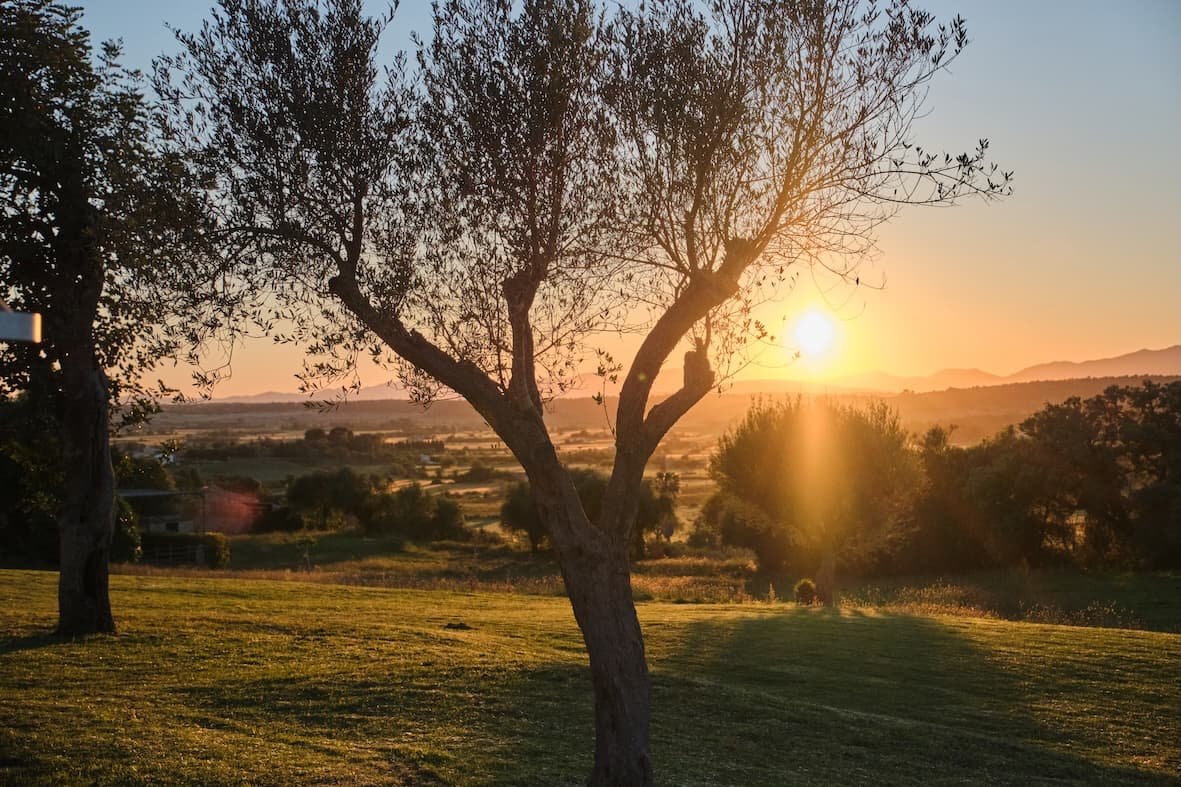
For three days in the Tramuntana, the conditions are arranged on your behalf. The phone goes quiet. The view stretches. The food is good. The body remembers it has a body.
Only then do we open the question of leadership in the age of AI — because only then can it be answered with anything other than the reactive intelligence of the over-stretched mind.
Read next
The room, and its light.
A photo essay on Son Salas — the finca behind every cohort. What a place actually does, when you let it.
This is the first in a series of field notes on set & setting, written between sessions at Finca Son Salas. The next piece looks at attention, and what we lose when we never let it rest.